Puppy-Proof Your Home: A Room-by-Room Checklist
By Team · June 20, 2026
Category: adoption-bringing-home
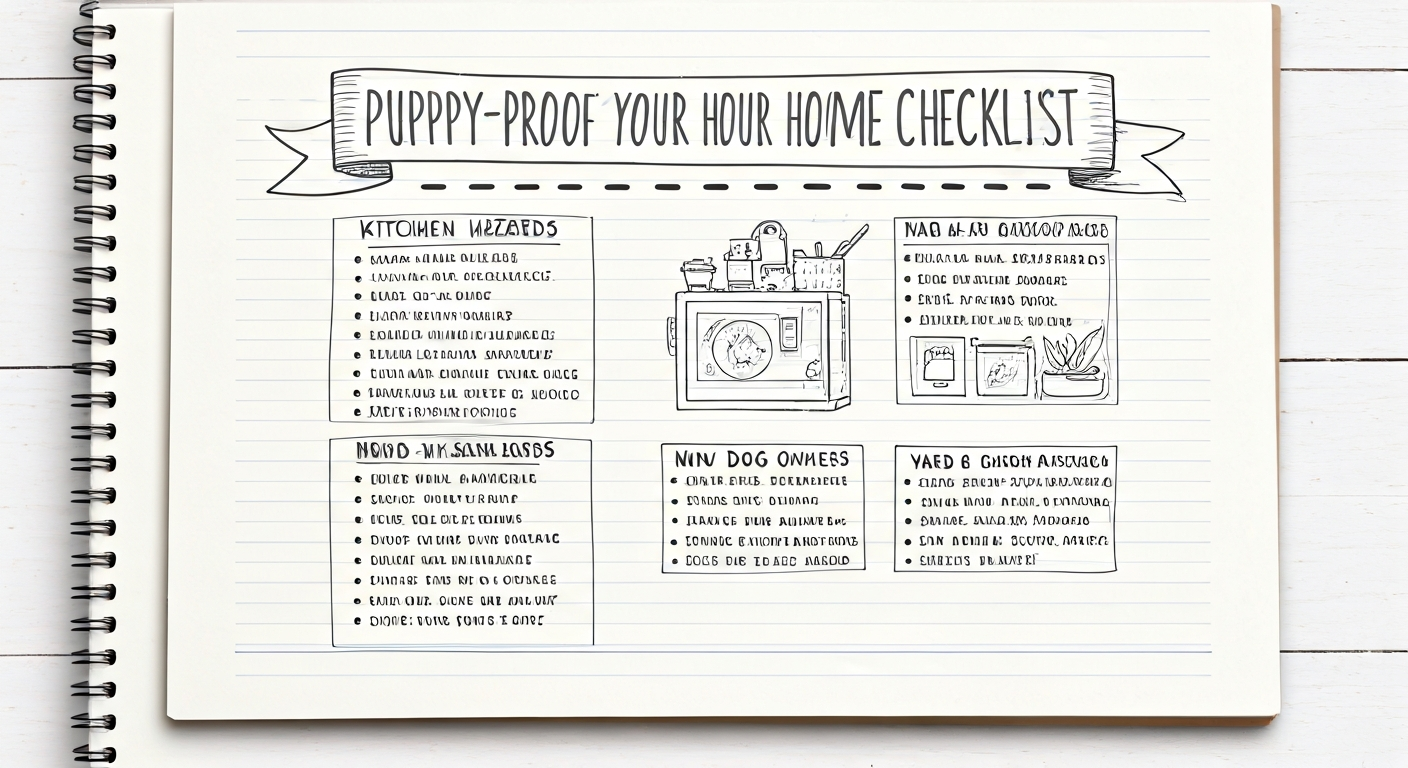
A room-by-room puppy-proofing checklist that helps new dog owners spot real hazards - from under-sink chemicals to yard plants - before their puppy does.
Key takeaways
The problem Puppies explore with their mouths and lack impulse control, turning ordinary household objects into serious hazards that can cause poisoning, choking, or injury.
Core insight Effective puppy-proofing means understanding four hazard categories (toxins, choking risks, entrapment, and electrical dangers) rather than memorizing lists, so you can spot new risks as your puppy grows.
Practical outcome Walk through each room with this checklist before your puppy arrives, secure cabinets and trash cans, remove small objects and cords from reach, and check your yard for toxic plants and fence gaps.
A puppy left alone in a kitchen for ten minutes can find dish soap under the sink, chew through the bottle, and leave you with a foam-covered floor and a dog who needs an emergency call to the vet. That's not a worst-case scenario - it's a Tuesday for a lot of new puppy owners. Puppy-proofing your home is one of the most practical things you can do before your dog arrives, and this room-by-room checklist will help you get it right.
Understanding Puppy Hazards in Your Home
Puppies explore the world with their mouths. They don't weigh the consequences of chewing a power cord or swallowing a rubber band - they're simply following instinct. Between 8 weeks and 6 months of age, a puppy is curious, teething, and has very little impulse control. That combination makes ordinary household objects genuinely dangerous.
It helps to think about hazards in four broad categories rather than trying to memorize an endless list of specific items.
Toxins include cleaning products, medications, certain foods, and many plants. Ingesting even a small amount of some substances can cause organ failure or death.
Choking and blockage risks include anything small enough to swallow - socks, coins, hair ties, toy parts. These often require surgery to remove.
Entrapment hazards include gaps under gates, behind appliances, or inside furniture where a small dog can become stuck or injured.
Electrical hazards are any cords or outlets within a puppy's reach. Chewing through a live wire can cause electrocution, severe burns, or cardiac arrest.
Understanding what makes each category dangerous - rather than just memorizing a checklist - helps you spot new hazards as they appear and make smarter decisions as your puppy grows.
Why Puppies Get Into Trouble

Teething is uncomfortable, and chewing relieves that pain. Boredom pushes puppies toward destructive exploration because they need mental and physical stimulation to feel settled. And unlike adult dogs, young puppies don't have object permanence in any meaningful way - they don't understand that a closed cabinet door is a boundary, or that a trash can lid means "don't touch."
Here's how trouble usually unfolds: you step away from the kitchen for ten minutes, your puppy sniffs out the cabinet under the sink, paws it open, and starts chewing the dish soap bottle. You come back to find chewed plastic and a dog with a foamy mouth. The puppy wasn't being defiant - it was just being a puppy.
It's worth reframing what puppy-proofing actually is. It's not punishment, and it's not about restricting your dog's spirit. It's about setting your puppy up to succeed by removing opportunities for harm while they're still learning how the world works. That's your job right now, not theirs.
The Kitchen: Securing Food, Chemicals, and Appliances
The area under the kitchen sink is one of the most dangerous spots in any home. Cleaning products, dishwasher pods, drain cleaner, and garbage bags all tend to live there - and most of them are toxic to dogs. A child-proof latch on that cabinet is one of the first changes to make. If you're not sure a latch is secure enough, assume it isn't and move the contents to a higher shelf entirely.
The trash can deserves more attention than most people give it. A closed lid isn't enough. Puppies can tip standard trash cans, paw them open, or squeeze into surprisingly small gaps. Invest in a locking trash can with a foot pedal or a cabinet-mounted bin that the puppy simply can't reach. Food waste, chicken bones, coffee grounds, and onion skins are all serious hazards sitting right there in the bin.
Appliances and countertops are also worth addressing. Puppies jump higher than you expect, and they can pull food - or hot pans - off low surfaces. A stove guard prevents curious noses from getting too close to burners. Appliance cords should be tucked or secured. And the simplest rule: never leave food cooling unattended at puppy height.
The Bedroom and Bathroom: Medications, Textiles, and Small Objects
Medications are among the most serious household hazards for dogs. Ibuprofen, acetaminophen, antidepressants, and many vitamins can cause kidney failure, liver damage, or worse in dogs - often at doses that seem small. If you leave a bottle of ibuprofen on a nightstand and your puppy jumps on the bed, tips the bottle, and chews through the cap, you're looking at a veterinary emergency. Keep all medications in closed drawers or in a high cabinet, and don't assume a childproof cap is puppy-proof.
Textiles are a surprisingly common cause of veterinary surgery. Puppies swallow socks, underwear, and small towels. Fabric doesn't pass through the digestive system the way food does - it bunches and tangles, causing intestinal blockages that often require surgery to correct. Keep laundry off the floor and bedroom doors closed when you're not supervising.
Small objects in bathrooms deserve specific attention: hair ties, bobby pins, rubber bands, batteries, and coins are all choking hazards and blockage risks. The easiest solution is to keep the bathroom door closed. If that's not practical, a baby gate across the doorway works well.
The Living Room and Hallways: Electrical, Furniture, and Escape Routes
Power cords are everywhere in most living rooms, and puppies chew them. Electricity can stop a heart. That's not an exaggeration - it's the plain reality of what happens when a dog bites through a live wire. Cord covers and cord bundlers are inexpensive and widely available. Anything you can't cover, route up and out of reach. Furniture cords from lamps and entertainment units are particularly easy to miss.
Furniture stability is something most people don't think about until something falls. Puppies climb, jump, and pull - and a bookshelf or TV stand that isn't anchored to the wall can topple. Anchoring tall furniture with wall straps is a straightforward fix, and it protects children too if you have them.
Escape routes are the third concern in this part of the house. Puppies dart through open front doors, slip under baby gates that aren't fitted properly, and find gaps behind appliances where they can become stuck. Baby gates on stairs are essential for young puppies who don't yet have the coordination to navigate steps safely. Keep interior doors to off-limits rooms closed, and do a low-level scan of hallways for gaps behind radiators, appliances, or under furniture.
The Yard and Outdoor Spaces: Fencing, Plants, and Parasites
A fence you haven't checked recently may not be as secure as you think. Puppies are small and determined - they find gaps under gates, squeeze through loose boards, and can disappear in seconds. Walk your fence line before your puppy arrives. Check for gaps at ground level, any boards that move, and whether the gate latches securely from both sides. If you find a gap, fix it before assuming your dog won't find it.
Many common garden plants are toxic to dogs. Sago palm is particularly dangerous - even a small amount can cause liver failure. Lilies, azaleas, foxglove, and yew are also serious hazards. Walk your yard and identify what's growing there, then cross-check with your vet or the ASPCA's plant toxicity list. Yard treatments add another layer of risk: pesticides, fertilizers, slug bait, and cocoa mulch can all cause poisoning if a puppy walks through treated areas or eats contaminated soil.
Parasites are also a yard concern, especially for puppies whose immune systems are still developing. Worms, fleas, and ticks can be picked up from soil or wildlife feces. Regular deworming and flea and tick prevention aren't optional extras - they're standard care that your vet will guide you through from the first visit.
Toys, Chews, and Enrichment: Choosing Safe Options
Not every toy sold in a pet store is safe for a puppy. If you buy a cheap toy with a loose squeaker and your puppy tears it apart - which they will - that squeaker becomes a choking hazard within minutes. Look for toys rated for your puppy's size and chewing strength. Inspect them regularly, and throw out anything that's broken or fraying.
Rawhide chews get recommended often because they seem natural, but they're not as safe as they appear. Rawhide softens as a dog chews it, and pieces can break off and become choking hazards or cause blockages in the digestive tract. Many vets recommend safer alternatives like rubber chew toys, bully sticks given with supervision, or chews specifically designed to break down safely. Ask your vet what they recommend for your puppy's size and age.
Puppies get bored with the same toys quickly, and boredom leads back to destructive chewing. A simple rotation strategy helps: keep three or four toys accessible at any time, and swap them out weekly. The toys that were put away feel new again when they come back out. This keeps your puppy engaged without requiring you to buy more toys constantly.
When to Seek Support
Some situations need professional attention right away. If your puppy swallows something toxic, call your vet or the ASPCA Animal Poison Control Center (888-426-4435) immediately - don't wait for symptoms to appear. If your puppy is vomiting repeatedly, seems lethargic, has lost interest in food, or is straining without producing a bowel movement, these can be signs of an intestinal blockage and need veterinary assessment the same day.
Puppy-proofing can feel overwhelming, especially in the first few weeks. If you're unsure about specific hazards in your home, or if your puppy seems unusually drawn to dangerous items, your vet or a certified professional dog trainer can help you assess your space and your dog's behavior together.
Some puppies are simply more accident-prone than others. Certain breeds are highly food-motivated and will work harder to get into locked spaces. Others are anxious or under-stimulated and channel that into destructive behavior. If your puppy repeatedly seeks out hazards despite your efforts, that's worth raising with a trainer - it may be a sign they need more structured enrichment or mental exercise, not just more gates and locks.
Puppy-proofing isn't a single afternoon project. It's a habit of noticing your space from your dog's perspective and adjusting as they grow. The good news is that it gets easier - and so does your puppy.